
Experiences · Chocolate & Coffee · Arenal
Chocolate & Coffee Farm Tour — Cacao, Coffee and Cane in One Visit
Grind your own chocolate, follow Costa Rica’s grano de oro from cherry to cup, and taste the cane in between — on one four-generation family farm at the foot of Arenal, on day three of the Costa Rica Triangle.
Intensity: Light
Costa Rica sells you coffee.
This farm surprises you twice.
Everyone arrives knowing about the coffee.
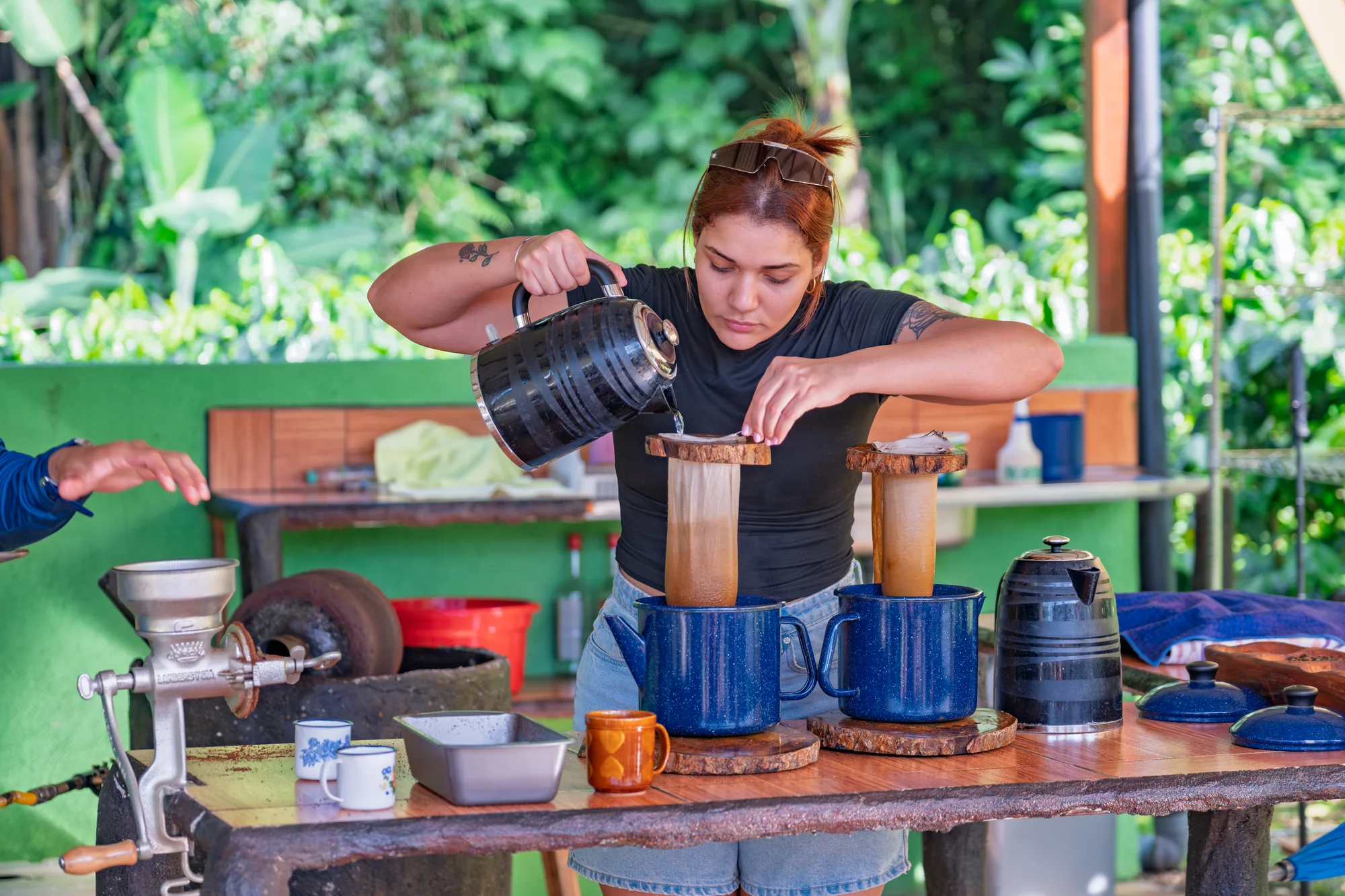
It’s the country’s calling card, and this farm earns it — four generations on volcanic soil, hand-picking, roasting, and a guided tasting that takes you from cherry to cup. You’ll leave understanding your own coffee better than you did this morning.
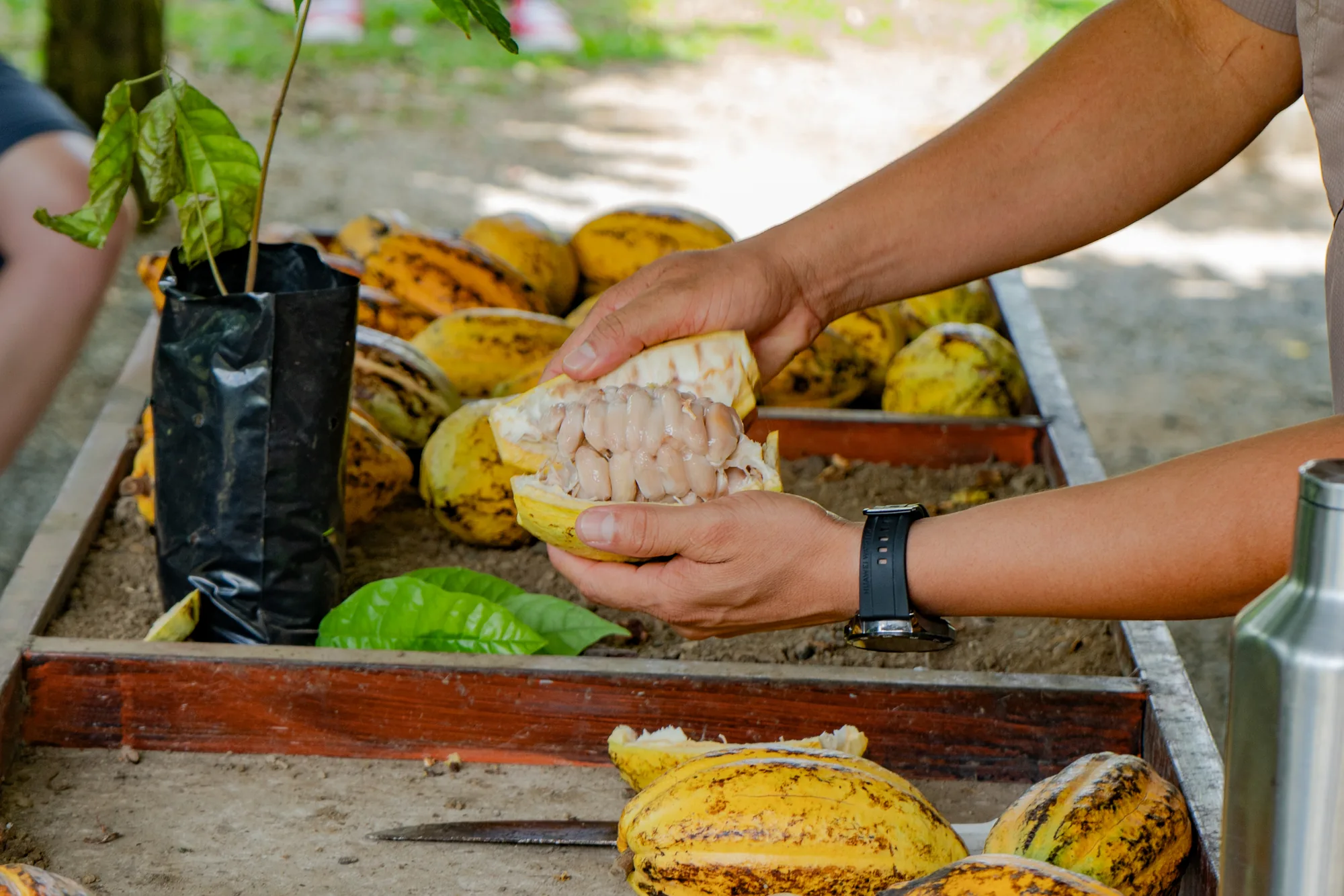
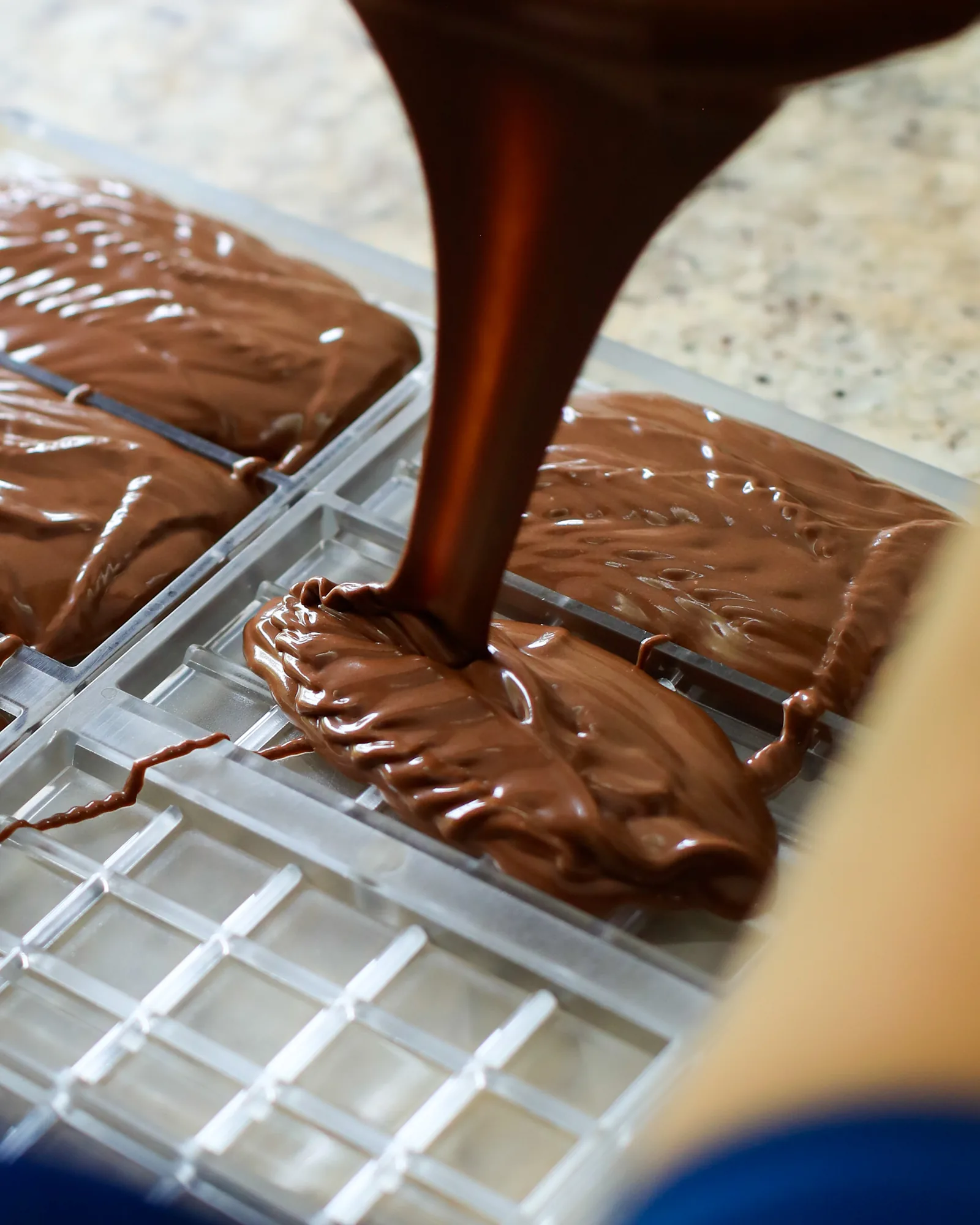
Then someone hands you a cacao pod, and the afternoon changes. You crack it open, taste the sweet white pulp almost no visitor has heard of, roast the beans, grind them by hand on stone, and drink a cup of chocolate you made yourself. Of every experience we studied, this is the one travelers rate highest — and it’s the one nobody sees coming.
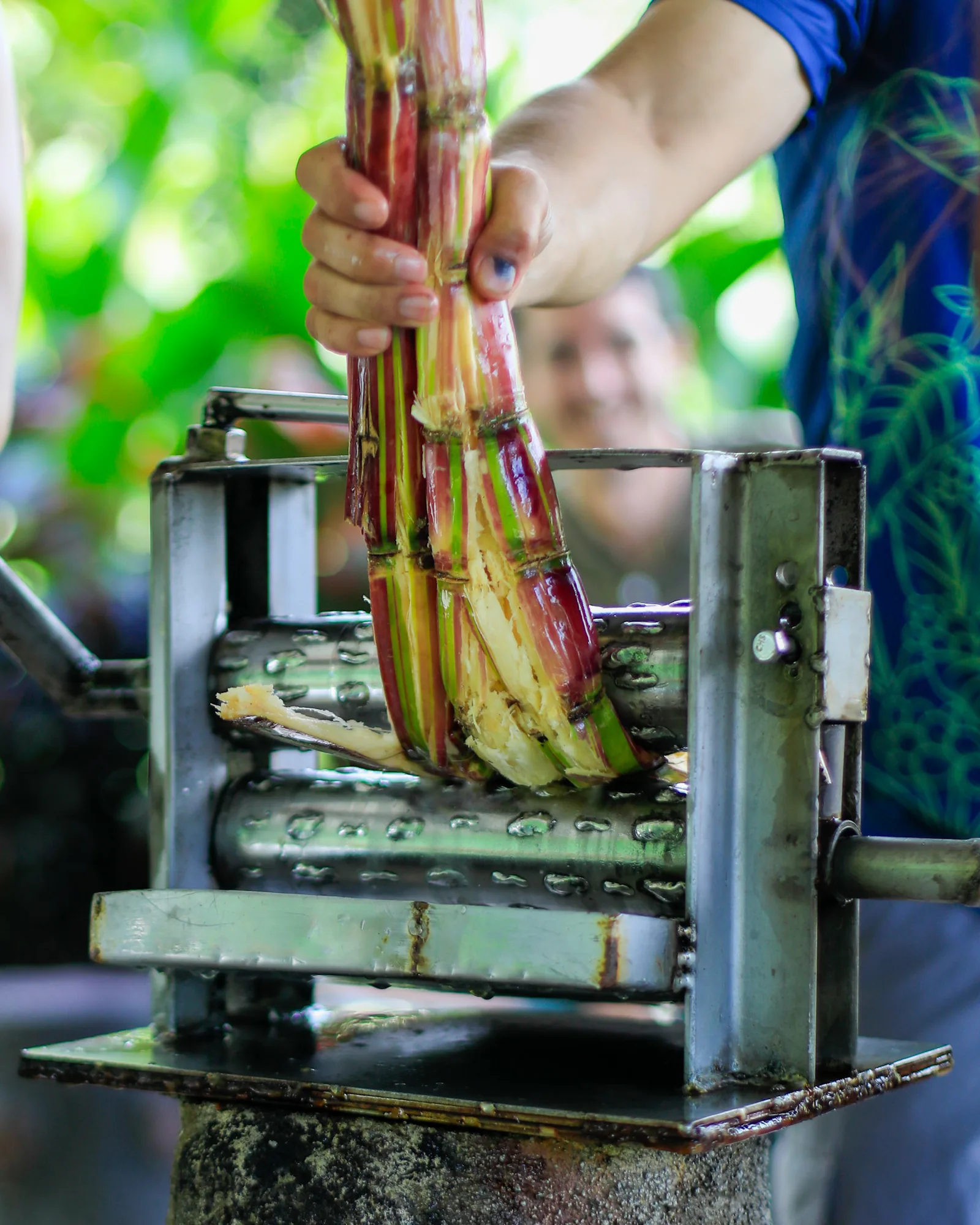
And between the two, there’s sugar cane: pressed in front of you, drunk on the spot. Coffee, chocolate and cane — the whole Costa Rican trinity, on one farm, in one unhurried visit. It’s five minutes from La Fortuna, entirely under cover, and just as good in the rain.
Highlights
Three crops, one visit
Coffee, cacao and sugar cane — grown by the same family, tasted side by side. Most farms give you one of the three.
Truly hands-on, both halves
You hand-pick, you roast, you grind, you press. A workshop, not a watch-and-listen demo — you leave having actually made the chocolate, sticky fingers and all.
A real four-generation family farm
Not a staged stop for tour buses. Coffee from the family’s own land in Naranjo, cacao from Guatuso and Upala, and the same hands that harvest it guide you through it.
The proof is in the cup
The #1 Food & Drink tour in La Fortuna (Travelers’ Choice), 4.9★ across 3,127 reviews — and the highest-scoring partner in our own 62,000-review vetting.
From the farm
What the visit looks like
The Half You Came For: Costa Rica’s Grano de Oro
The best coffee you’ll drink in Costa Rica is the cup you watched go from cherry to roast.
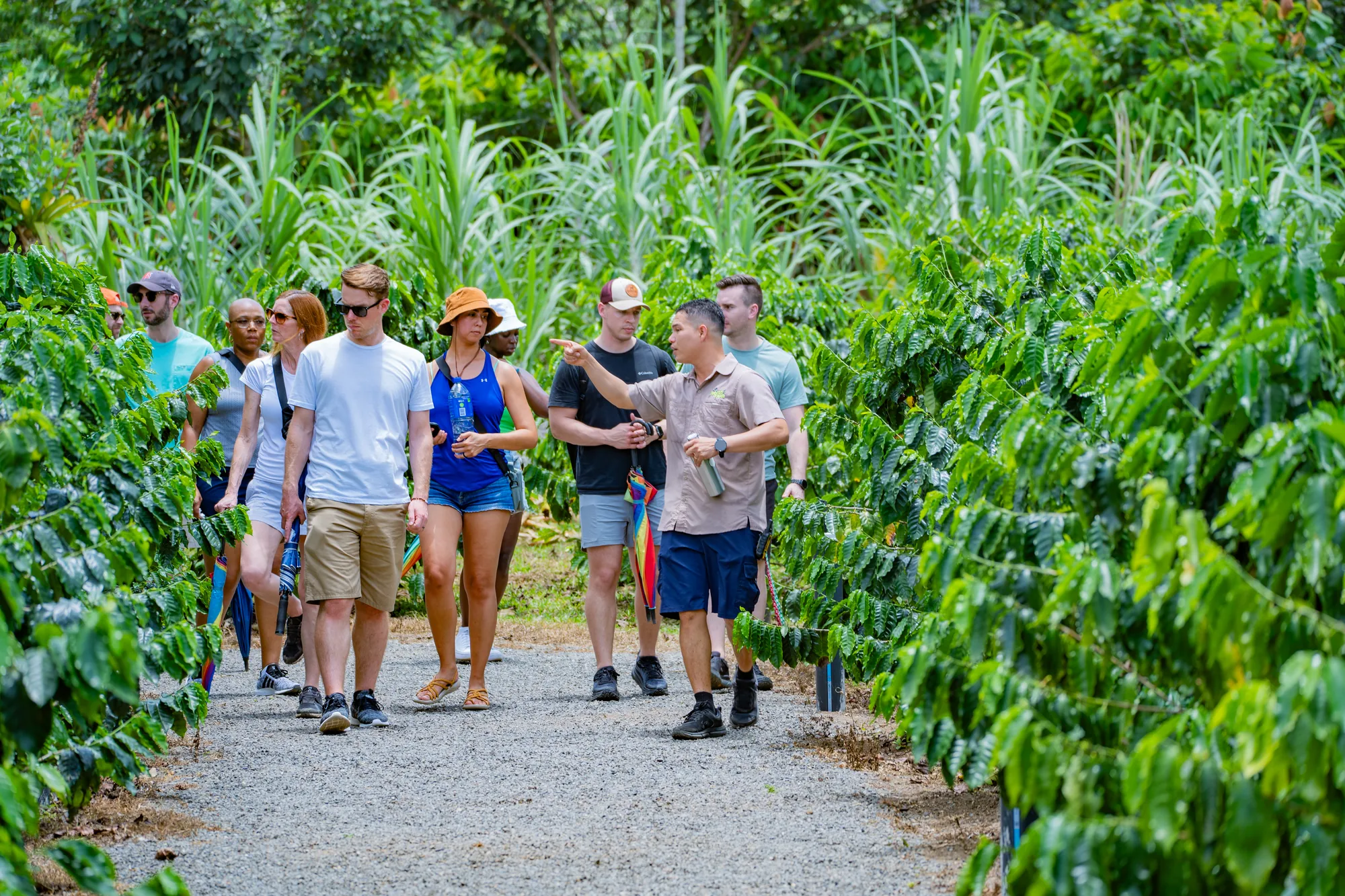
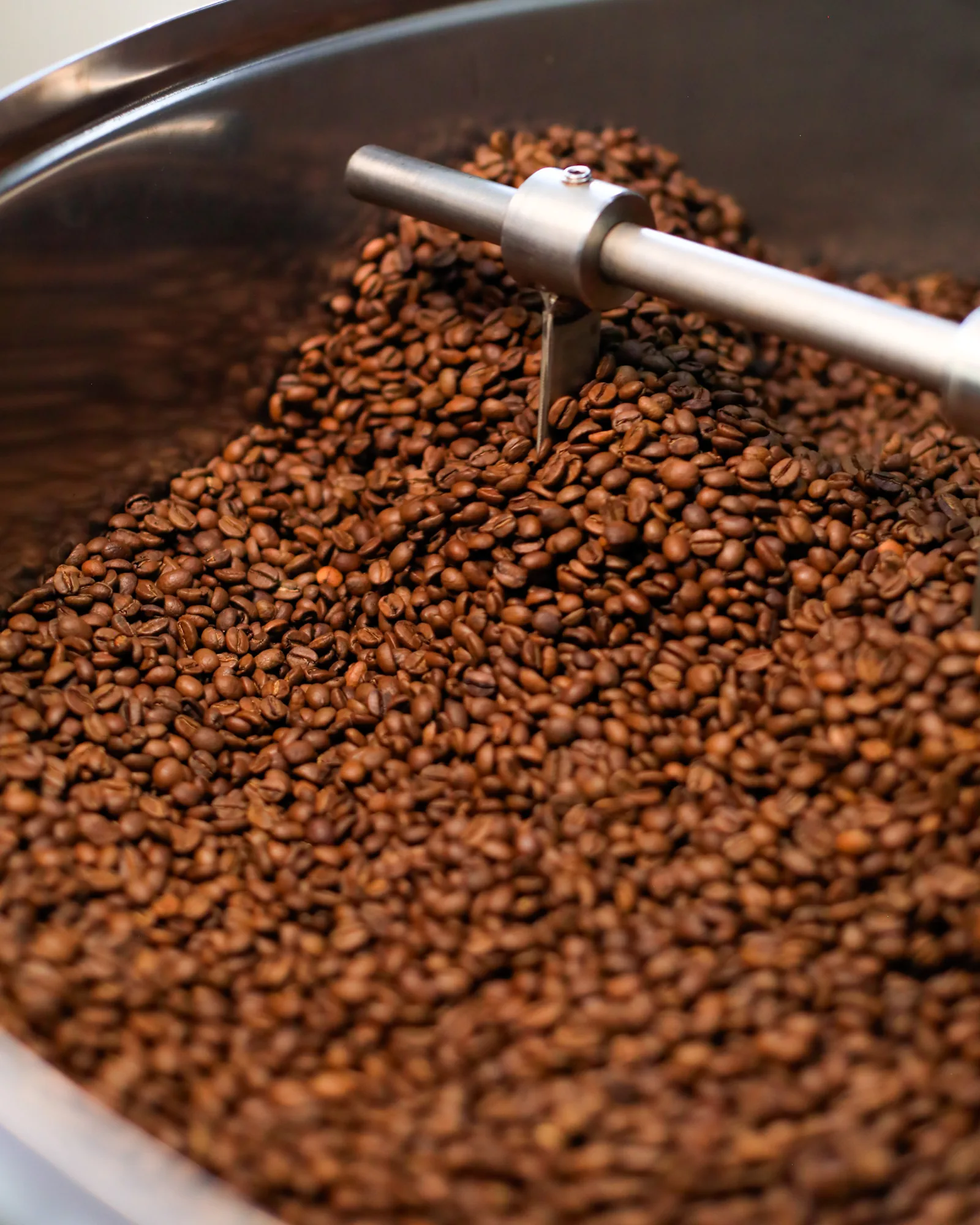
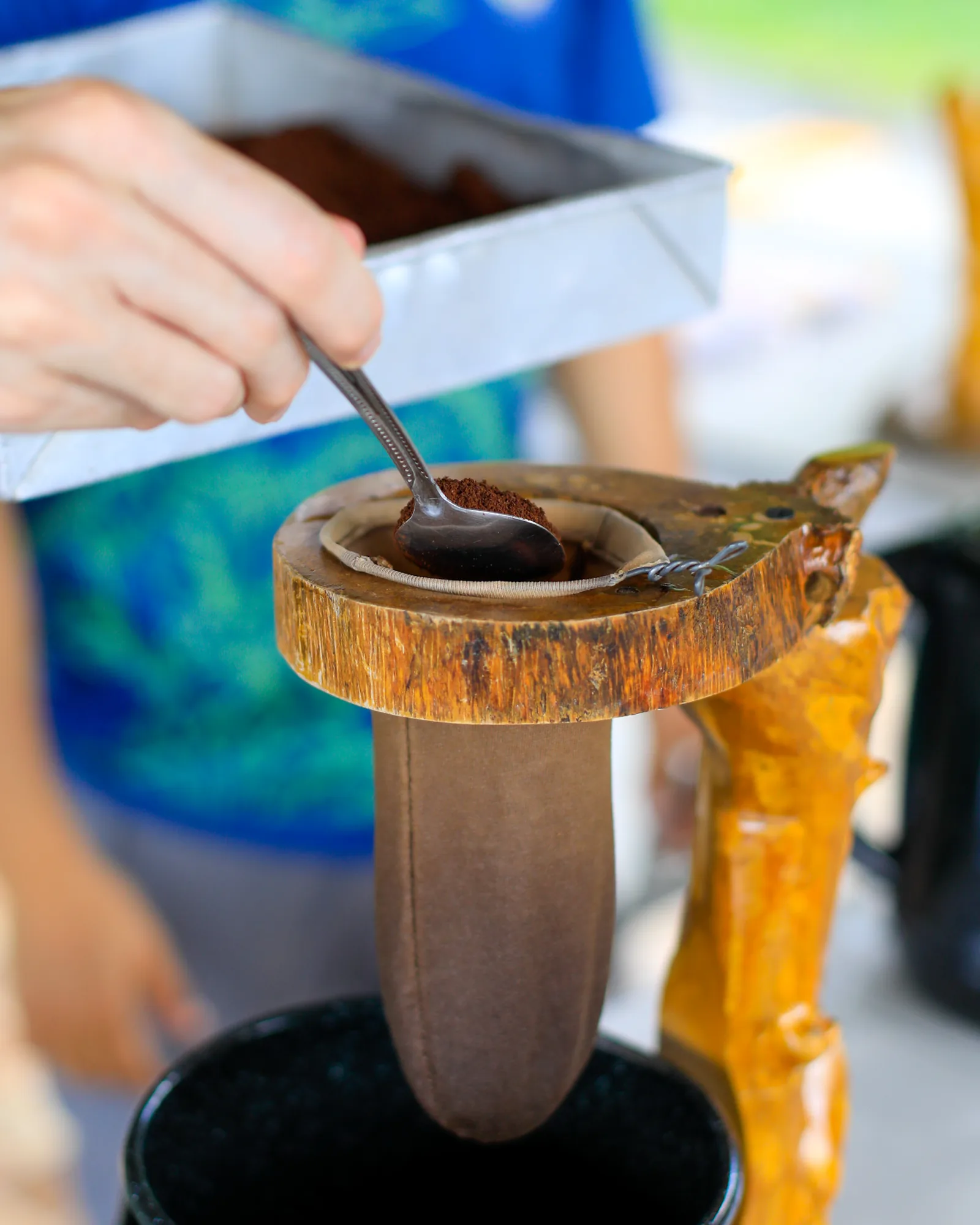
You walk among ripening cherries and see the patient hand-picking that machine harvests can’t match. You watch the beans de-pulped, dried and roasted, then sit down to a guided tasting — medium and dark, side by side — that finally makes the words on a bag mean something.
And you’ll come away understanding why the cup tastes the way it does. Volcanic soil lends clarity, structure and balance. High-altitude slow growth keeps the beans clean and uniform. And Costa Rica’s deliberate choice to grow only Arabica gives the coffee its smoother texture, its bright, never-sour acidity and its delicate sweetness — light fruit, chocolate and nuts, and a clean finish.
Then the family walks you thirty steps to the cacao, and the part nobody warned you about begins.
The Half Nobody Sees Coming: From Pod to Bar
The best coffee you’ll drink in Costa Rica is the cup you watched go from cherry to roast.
You walk among ripening cherries and see the patient hand-picking that machine harvests can’t match. You watch the beans de-pulped, dried and roasted, then sit down to a guided tasting — medium and dark, side by side — that finally makes the words on a bag mean something.
And you’ll come away understanding why the cup tastes the way it does. Volcanic soil lends clarity, structure and balance. High-altitude slow growth keeps the beans clean and uniform. And Costa Rica’s deliberate choice to grow only Arabica gives the coffee its smoother texture, its bright, never-sour acidity and its delicate sweetness — light fruit, chocolate and nuts, and a clean finish.
Then the family walks you thirty steps to the cacao, and the part nobody warned you about begins.
Good for a Six-Year-Old and a Skeptic
This is the rare tour that wins over both. Kids are hooked the moment they taste the pulp; adults are quietly stunned at how good real, fresh chocolate is compared to the bar in their kitchen drawer. Because you taste at every stage, nobody is standing around waiting for their turn.
Timing changes what you’ll see on the coffee side. Harvest runs November to February, when the cherries are ripe and you can watch — or try — the picking. December to March leans into roasting demonstrations. The green months from April bring white coffee blossoms and a slower, lusher pace. The chocolate and the cane don’t care what month it is. A few small things help: mornings are cooler and brighter, closed-toe shoes beat sandals on uneven ground, and rain never cancels — it just turns the farm a deeper green.
You can take the day home from the farm shop, where the family sells its own chocolate and freshly roasted coffee straight from the source.
FAQ
Chocolate & Coffee Farm — Questions
One. A single visit of about two to two and a half hours covers all three — coffee, chocolate and sugar cane — on the same family farm. You don’t book them separately and you don’t pay twice.
That’s most people, and it’s usually the ones who say it who leave talking about the chocolate. The coffee half is genuinely excellent and led by the family who grows it. The chocolate half is the one travelers rate highest of anything we studied. You get both either way.
A guided walk on a working farm, then the full process for both crops: hand-pick, de-pulp, roast and taste the coffee; crack, roast, grind and taste the cacao. Plus fresh cane pressed in front of you. Hands-on throughout.
Yes. The experience is covered and completely rain-proof. Honestly, it’s our favorite thing to do on a wet afternoon in Arenal — and we’ll move your day around to put it there.
Families, couples and small groups — anyone who likes good coffee, good chocolate, or simply a relaxed and genuinely interesting few hours. It’s especially good with kids, and gentle enough for grandparents.
Yes — freshly roasted beans and the family’s own chocolate are sold at the farm shop, straight from the source. It’s the best way to take the trip home and support the family directly.
Plan your chocolate and coffee day with Destitrip
It’s our signature experience, built into nearly every Destitrip trip — or we’ll add it to any itinerary. Tell us your dates and you’ll get an instant reply on WhatsApp.
Worth timing: small-group mornings are exactly what fills first, and we run few trips at once by design. December through April goes early.