
Experiences · Wildlife & Sloths · All three regions
Wildlife & Sloths in Arenal, Monteverde and Manuel Antonio
The slow, wide-eyed creature everyone flies home talking about — and the guide who actually finds it.
Intensity: Light
See the Animal Everyone Comes For
On your own, you’ll walk right past a sloth ten feet away.
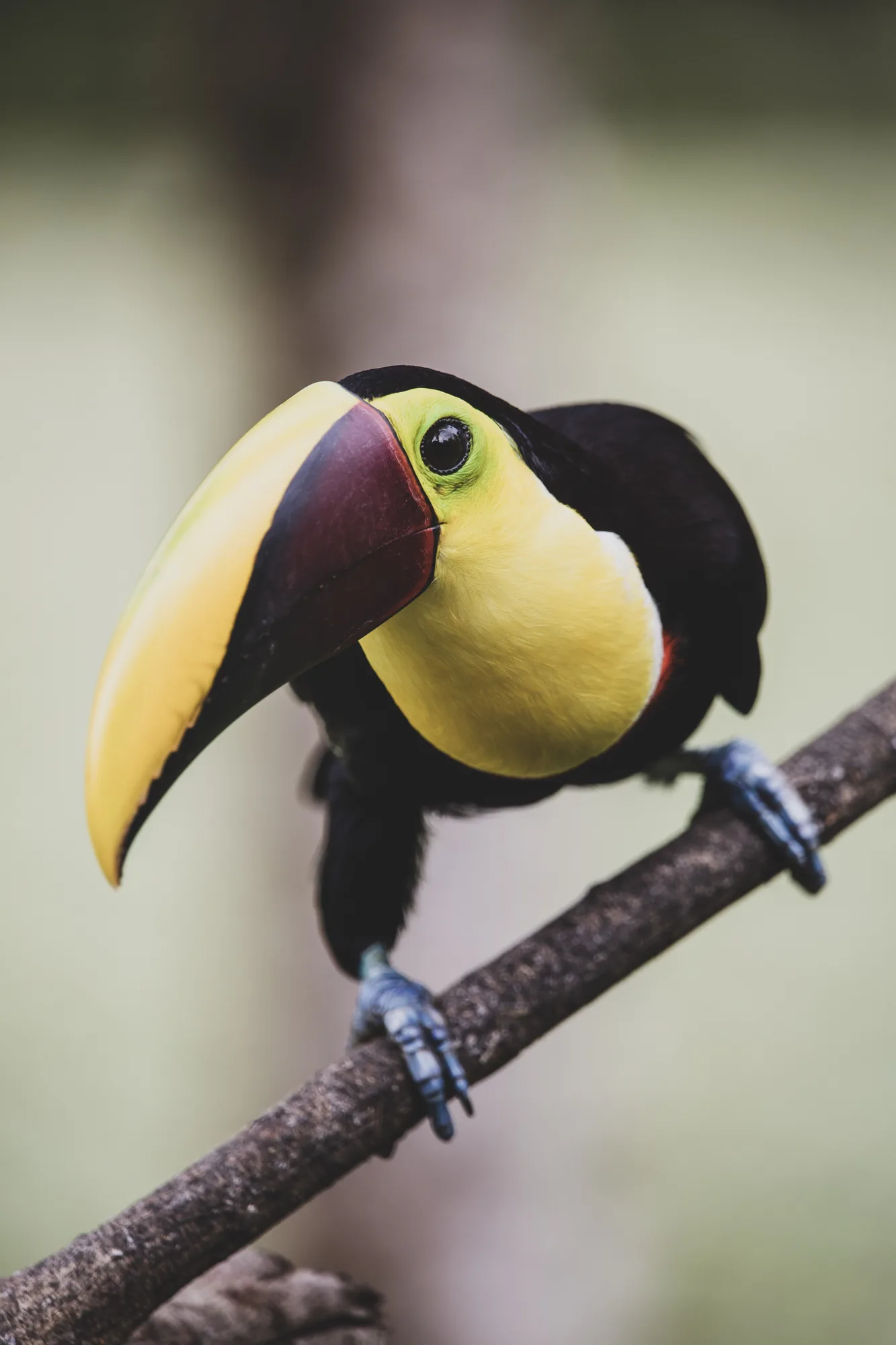
Everyone who visits Costa Rica wants to see one — but they’re masters of hiding in plain sight, curled in a ball high in the canopy. With the right guide and a spotting scope, you’ll see it crisp enough to count its claws, along with the frogs, toucans and tropical birds you’d never spot on your own. It’s the experience travelers describe first when they get home, so we don’t leave it to chance — and it’s the one thing the Costa Rica Triangle gives you three times over, in three different forests.
Highlights
Two kinds of sloth
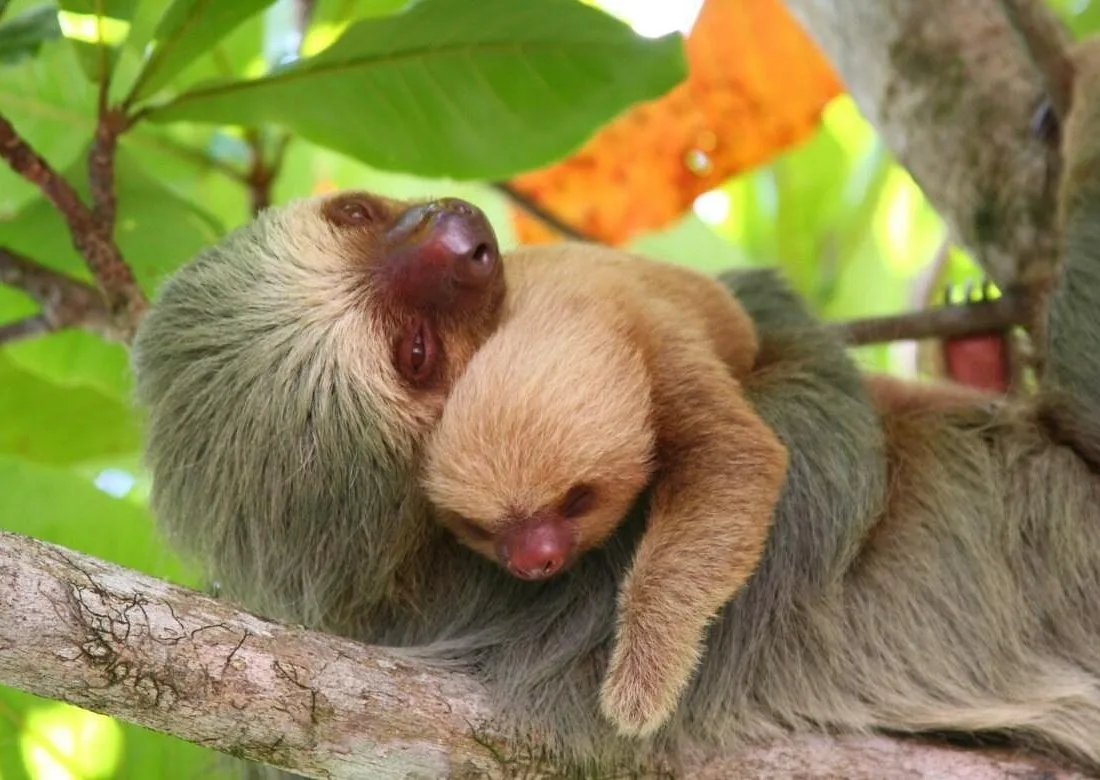
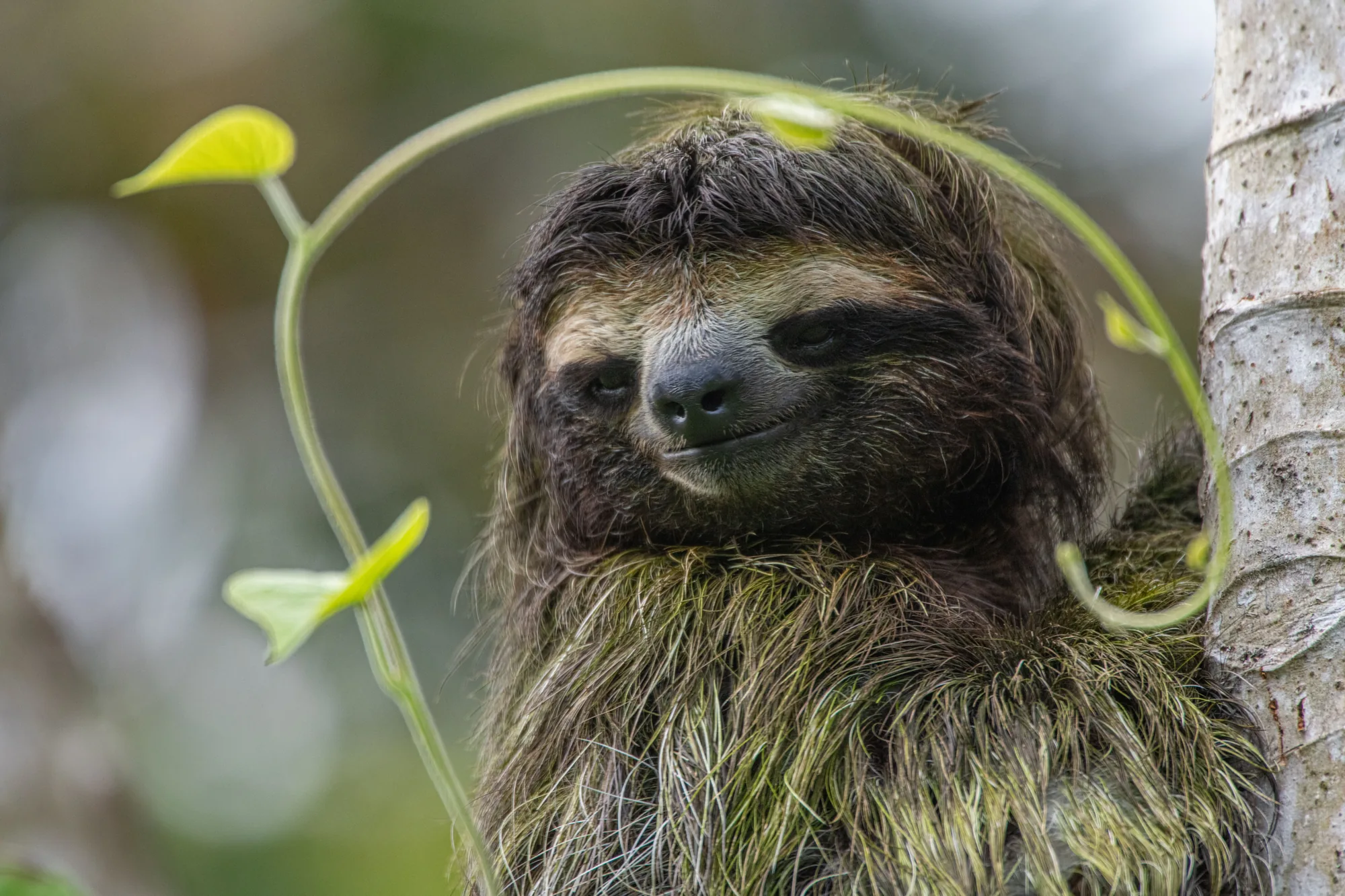
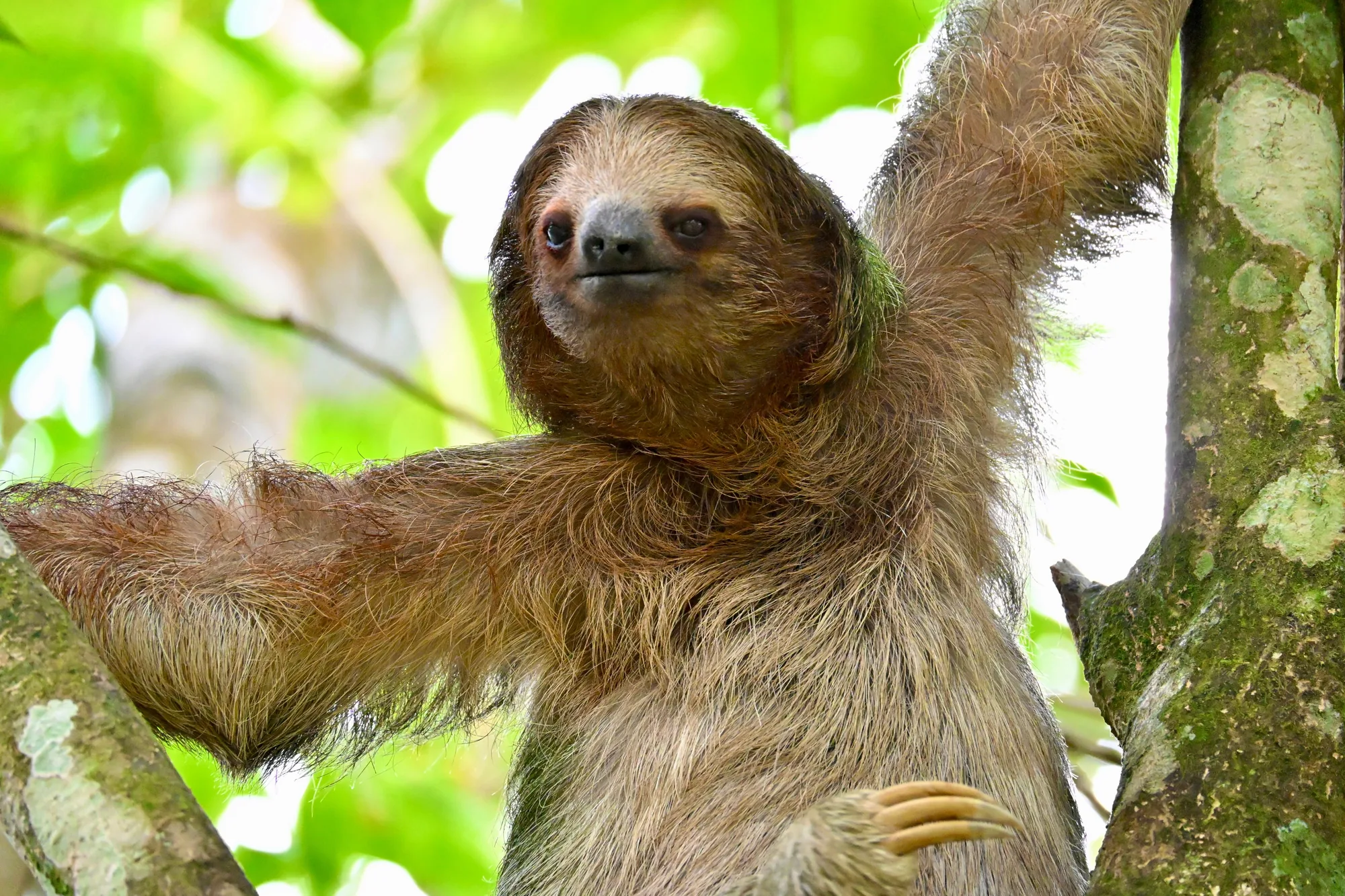
Costa Rica has both — the two-toed, with dark markings around the eyes, and the three-toed, with its permanent little smile. They can swivel their heads almost all the way around (up to 270°) without moving an inch.
A guide whose whole job is spotting
The animals are always there; seeing them is the skill. Yours carries a scope and knows exactly which branch to check.
Day or night — your call
Daytime is easy and scenic; the night walk is when the rainforest truly wakes up — frogs, insects and nocturnal animals that vanish by daylight.
More than sloths
A private rainforest reserve near La Fortuna means birds, frogs and dense, living jungle all around you.
Easy for everyone
Flat, accessible trails and a gentle pace — wonderful with kids and grandparents alike.
From the trail
What you might see
Meet Costa Rica’s Most Charismatic Creature
The sloth is the animal everyone asks about, and for good reason. It moves through life in slow motion, sleeping up to 15 hours a day and descending from its tree only about once a week. That unhurried pace is exactly why it’s so hard to spot on your own — and so magical when a guide places it in a scope right in front of you.
You’ll meet both of Costa Rica’s species. The three-toed sloth, with the markings that give it a permanent smile, suns itself to regulate its temperature; the two-toed is a little larger and more active after dark. Both can rotate their heads up to 270 degrees to scan for danger without burning precious energy — one of the many quiet adaptations your guide will point out as you go.
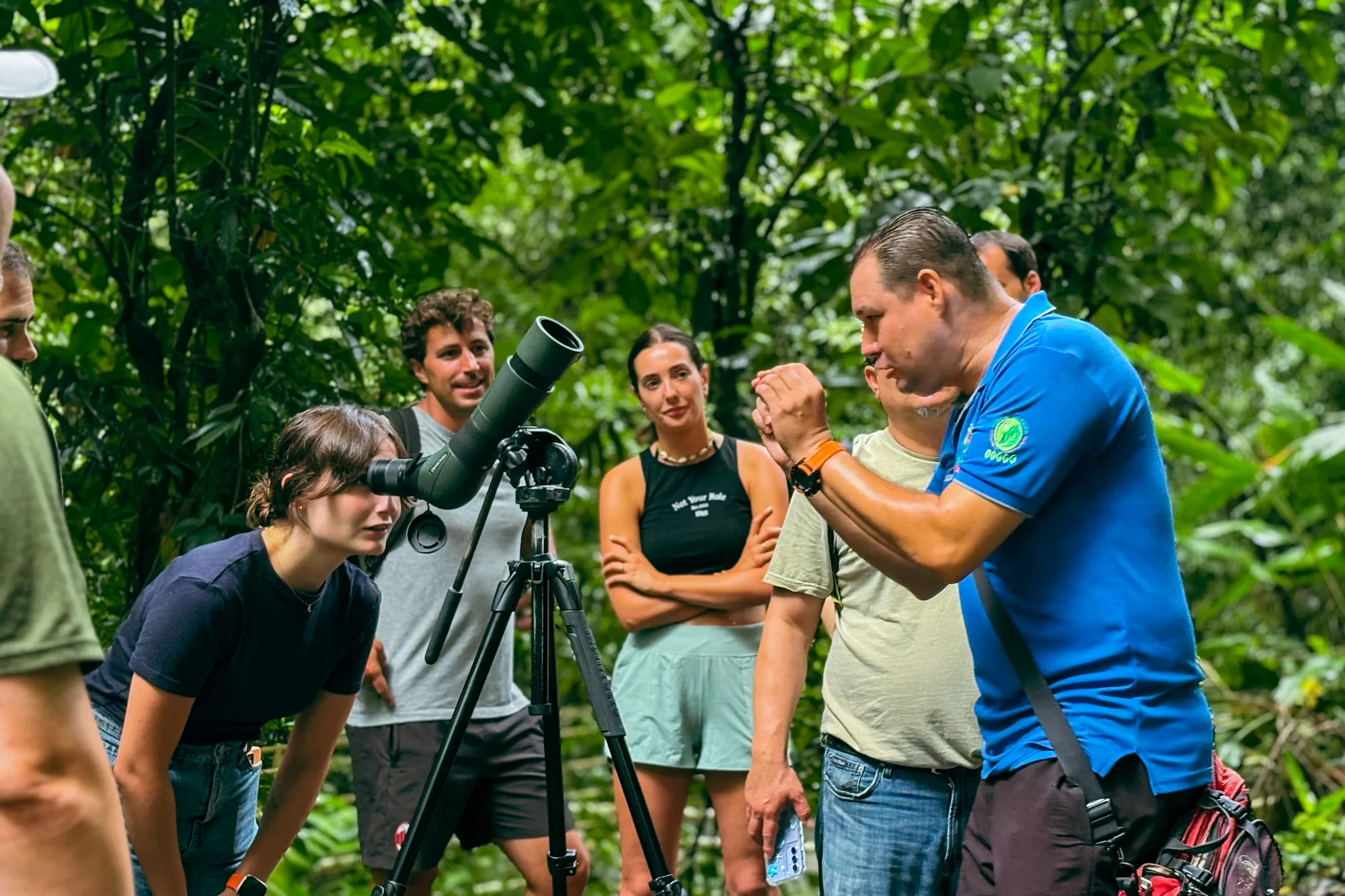
The walk itself unfolds in a private reserve a short drive from La Fortuna, on flat, well-kept trails built for easy strolling. Your naturalist guide leads the way with a high-powered scope, picking sloths out of the canopy and framing them so even the kids get a crisp, close-up look — then turning up frogs, birds and whatever else the forest is doing that day. It runs about two hours, at a pace that never feels rushed.
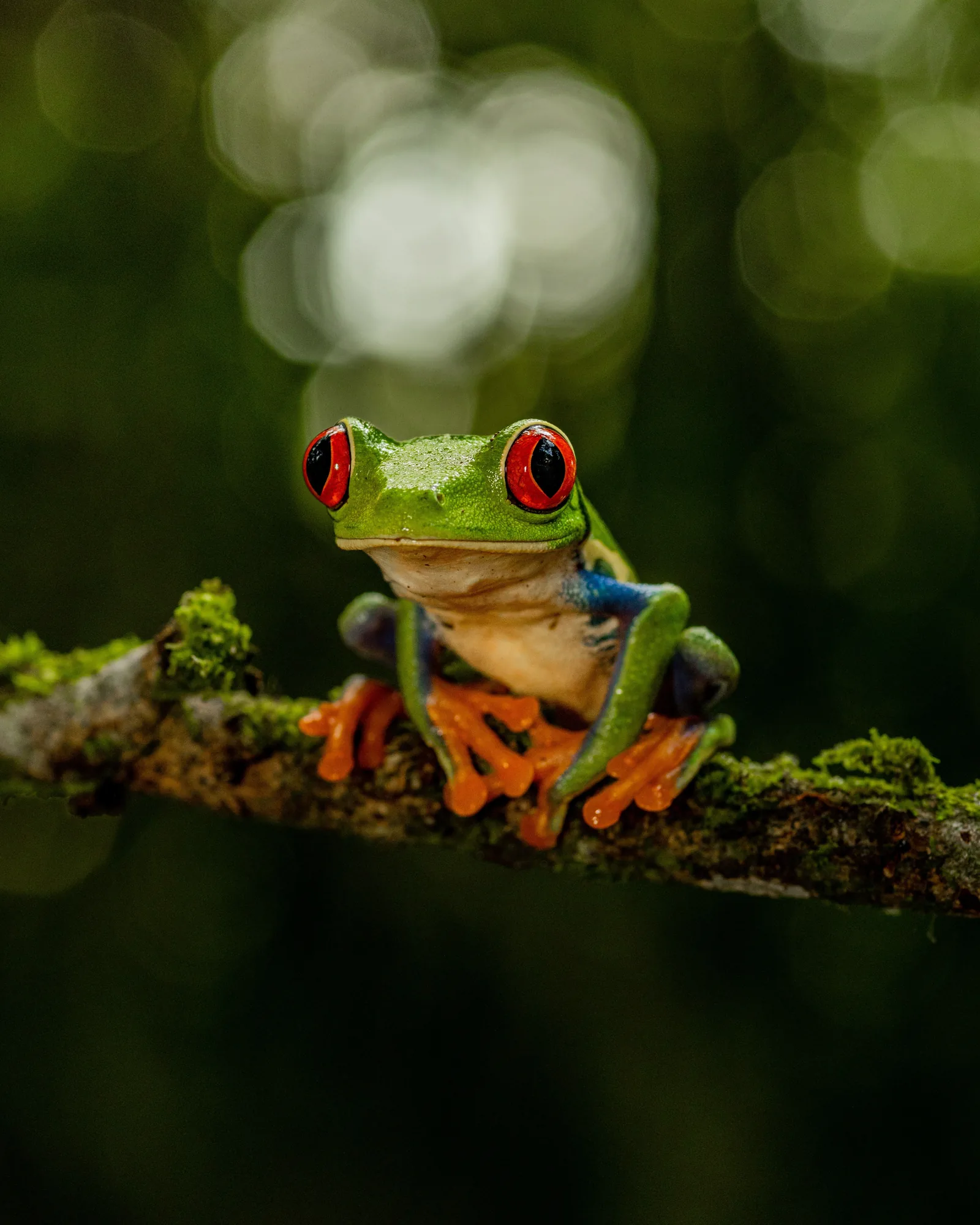
Come back after dark and it’s a different world. On the guided night walk, expert guides light an accessible trail and reveal the rainforest’s nocturnal side — red-eyed tree frogs, insects, sleeping birds and the animals that only stir once the sun is down. It’s the version wildlife lovers rave about, and it’s perfectly safe with a guide who does it every night.
Because wildlife is the heart of a Costa Rica trip, we build a guided walk into every Destitrip itinerary — in Arenal, again in the Monteverde cloud forest, and once more where the rainforest meets the sand at Manuel Antonio. If you want a dedicated morning of birdwatching or a photographer along, we’ll arrange it.
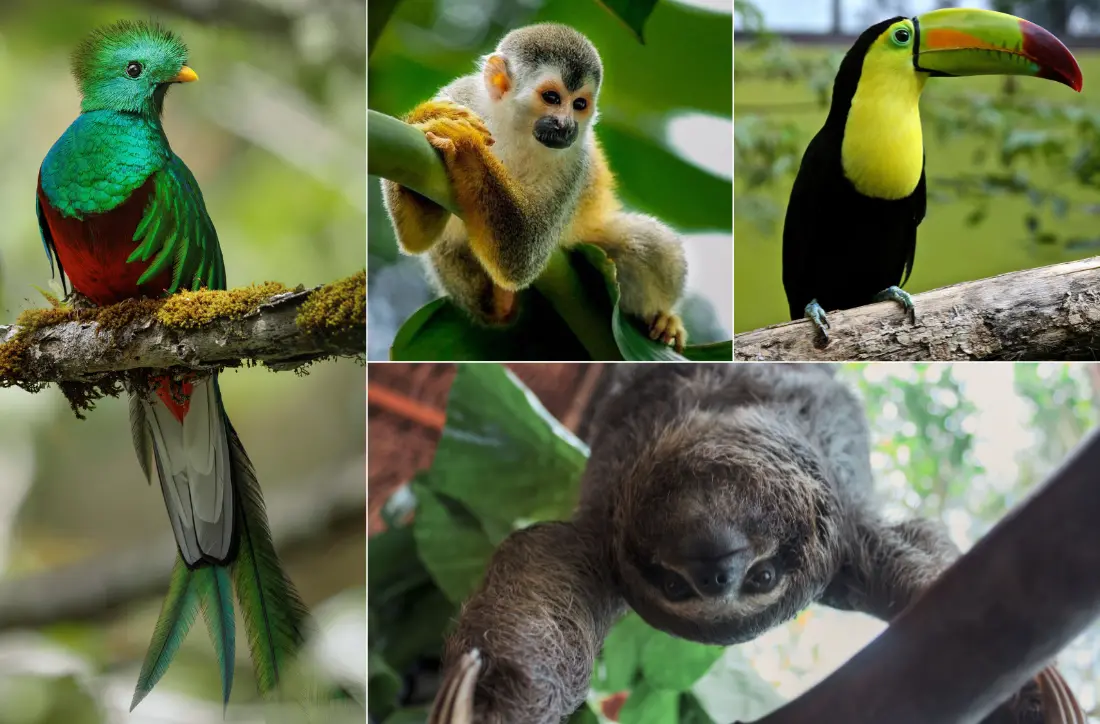
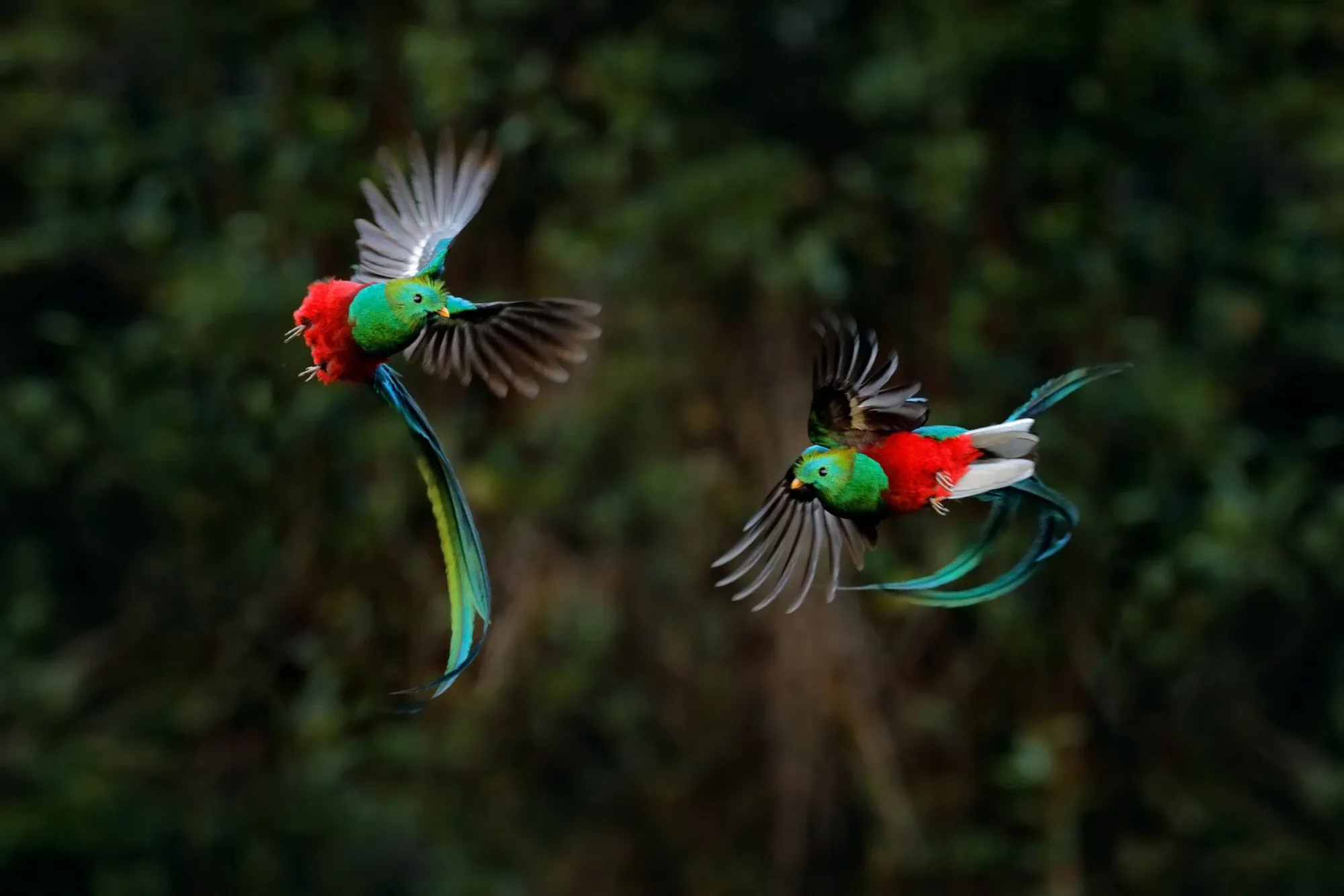
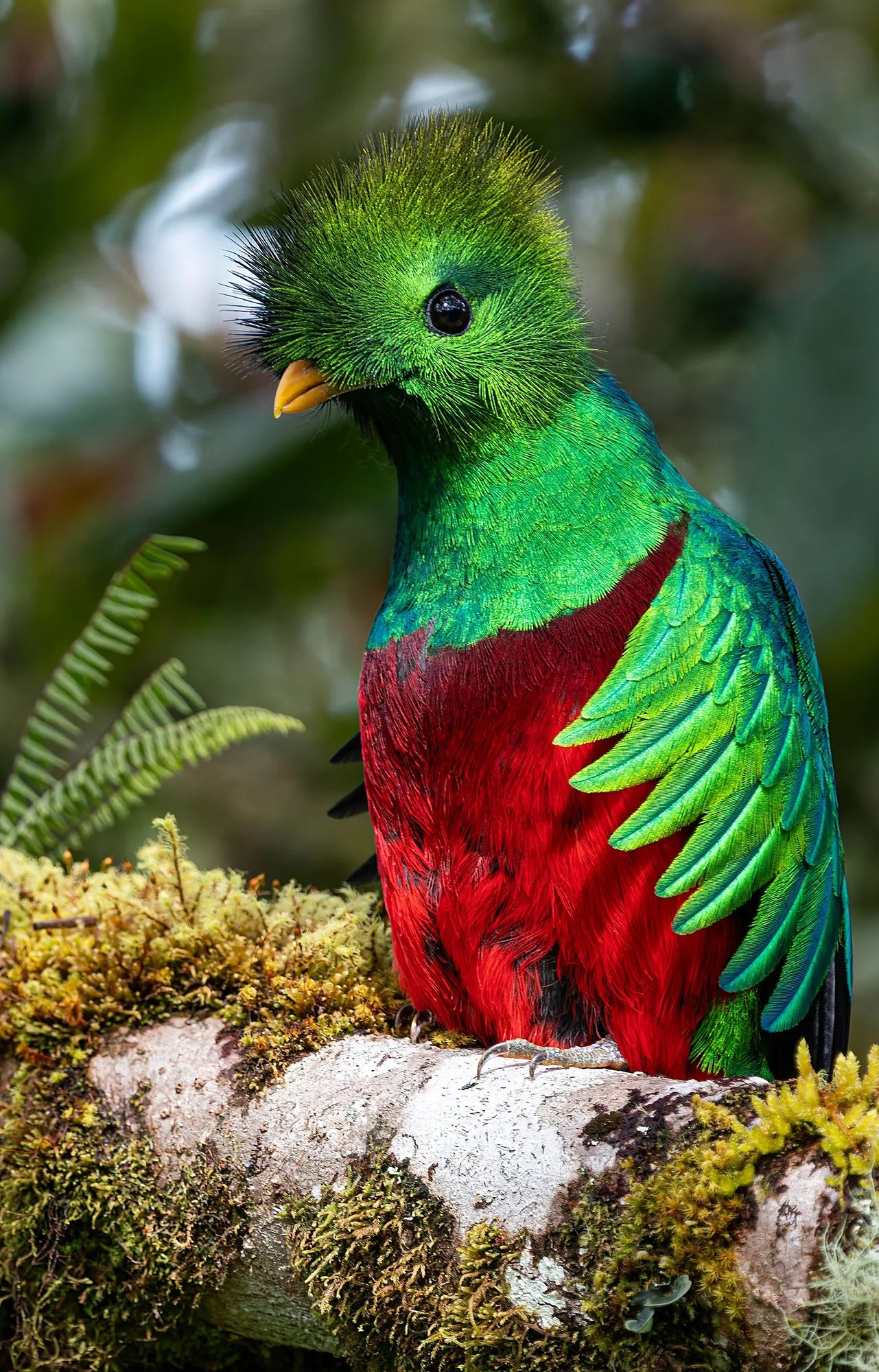
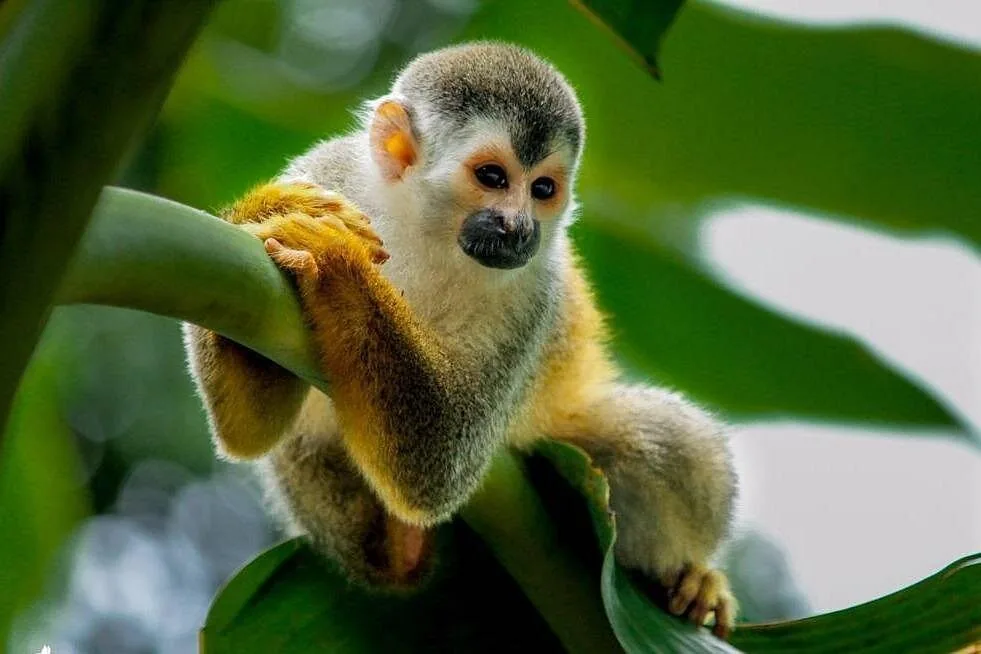
The animals change with the altitude, which is the quiet argument for doing all three regions instead of one. At Arenal you’re in warm lowland rainforest — sloths, howler monkeys, toucans, poison-dart frogs. Monteverde is cool cloud forest, still and dripping, where the quetzal lives and the bellbird carries for a kilometer. Manuel Antonio is the only stop where you watch capuchins and sloths with the Pacific behind them. Same trip, three completely different casts.
Good to know
Good to Know
Duration — about 2 hours, at an easy pace
Difficulty — light; flat, accessible trails, great for all ages
Day or night — both are wonderful; the night walk is best for active wildlife
What to bring — light layers, closed-toe shoes, insect repellent and sunscreen (your guide brings the scope)
Reservations — spots are limited in high season; we secure yours as part of your trip
Before you ask
Wildlife FAQs
Nothing wild is ever 100% guaranteed, but on these trails sloths are a near-daily sighting and your guide knows exactly where to look. If you want the surest bet, we route you through a dedicated reserve where they’re resident.
Both are great. Day is easy and scenic; the night walk is the one wildlife lovers remember, full of frogs and nocturnal life. Tell us your group and we’ll recommend (or do both).
Very. The walking is flat and easy, and kids love it — especially when the guide turns spotting into a game and lets them look through the scope.
Yes. Expert guides lead a well-lit, accessible trail and stay with your group the whole time.
Light layers, closed-toe shoes, insect repellent and sunscreen. A camera with a little zoom (or binoculars) is a bonus; your guide supplies the scope.
Reviews
What travelers say
“Our guide found three sloths and a toucan before we’d have spotted a single leaf. The kids were spellbound.”
— [Verified review placeholder]
“The night walk was unreal — frogs and a kinkajou we’d never have seen on our own.”
— [Verified review placeholder]
“Seeing a sloth through the scope, that close, is something our family still talks about.”
— [Verified review placeholder]
Plan Your Wildlife Day with Destitrip
A guided wildlife walk is built into every Destitrip trip — usually paired with the volcano or the waterfall. One all-in price covers your guide and transfers, with nothing to settle on the day. And once you’re here, a real person answers in under 15 minutes while we’re working — with a number to call for anything urgent, day or night.
Worth timing: the best wildlife guides get booked by the people who plan early, and we only run a handful of trips at once. High season goes first.